Vivint—Streety
A neighborhood watch, built from cameras people already owned.
More and more homeowners were turning to outdoor cameras for home security. Streety networked the ones neighbors already owned into a shared view of the street, so a request like “someone stole my bike last night, can I see video from 1 to 5am?” had somewhere to go. I was the only designer on the project. Product, UX, brand and collateral.
- US Patent 10522013
- Street Watch, granted December 2019
The Problem—The camera that saw it belongs to someone else
Doorbell and outdoor cameras were everywhere, and every one of them pointed at a slice of the same street. The cameras were not the problem. Getting neighbors to share what they had already recorded was.
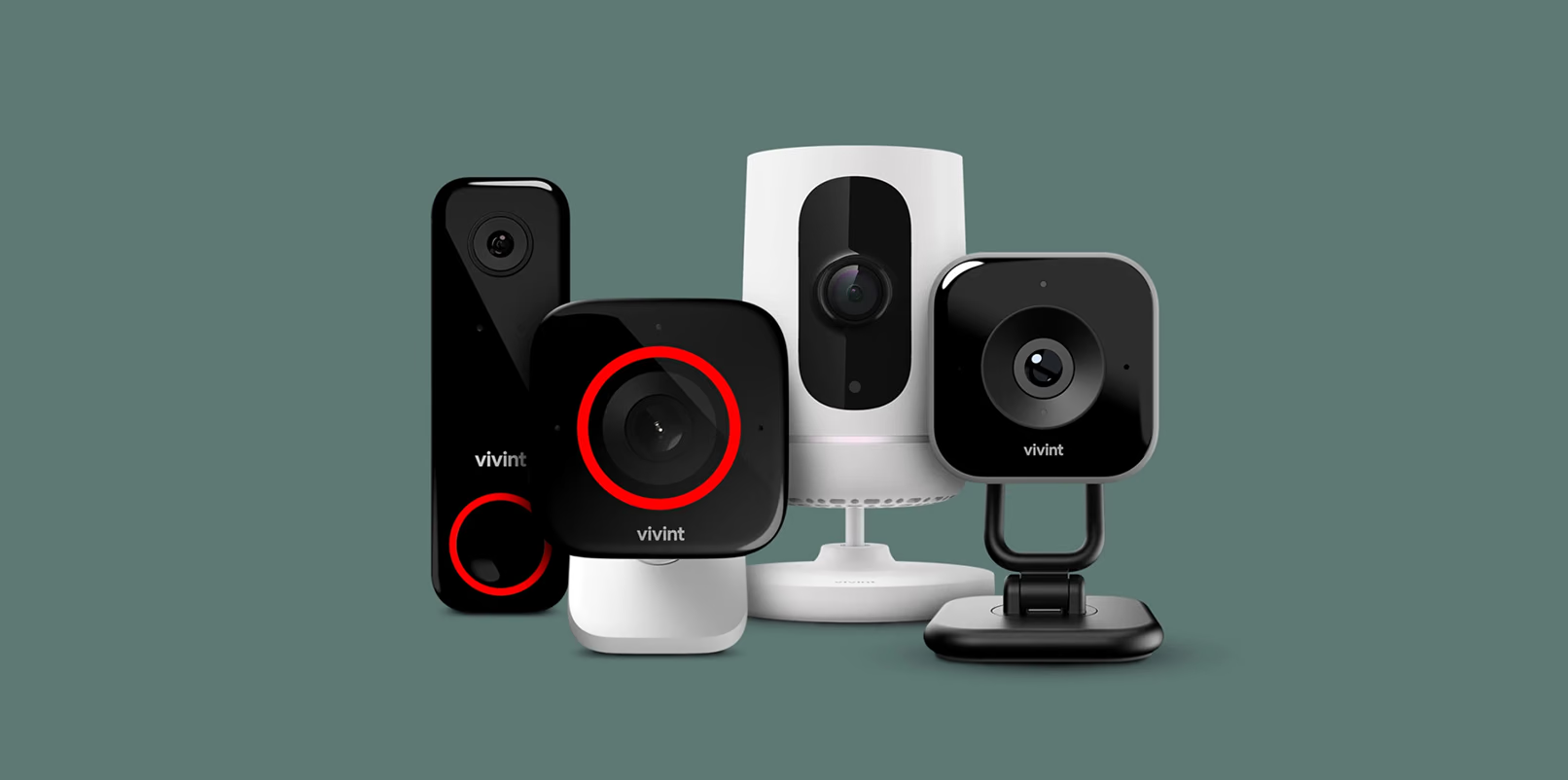
The footage that solves a break-in is often not yours. It is on a camera next door, or across the street, already recorded and never watched.
I did not want another feed to follow.
I wanted to reach my neighbors when I needed help.
The Solution—The request is the product
01—Build it around the request, not the timeline
A request carries what happened and the window it happened in, and it goes to the cameras near enough to have seen it. Neighbors get asked rather than subscribed, and what comes back goes to the one person who needed it. Nobody has to watch a street to be useful to it. The system was patented as Street Watch, US Patent 10522013.
02—Let the owner of the camera stay the owner of the footage
No video moves without the camera owner’s approval. That is architecture, not a setting. Neighborhoods were drawn in yards rather than miles, so your circle only held the people who could have seen it.
03—Treat onboarding as a density problem
Streety was worth nothing to the first person on a street and only paid off as neighbors joined, so every step in setup cost us a house. The only thing the flow genuinely needed was an address, because that is what puts someone on a street. The invite code got a Skip and the introduction got an “I’ll do this later”, so nothing optional could stand between a neighbor and the map.
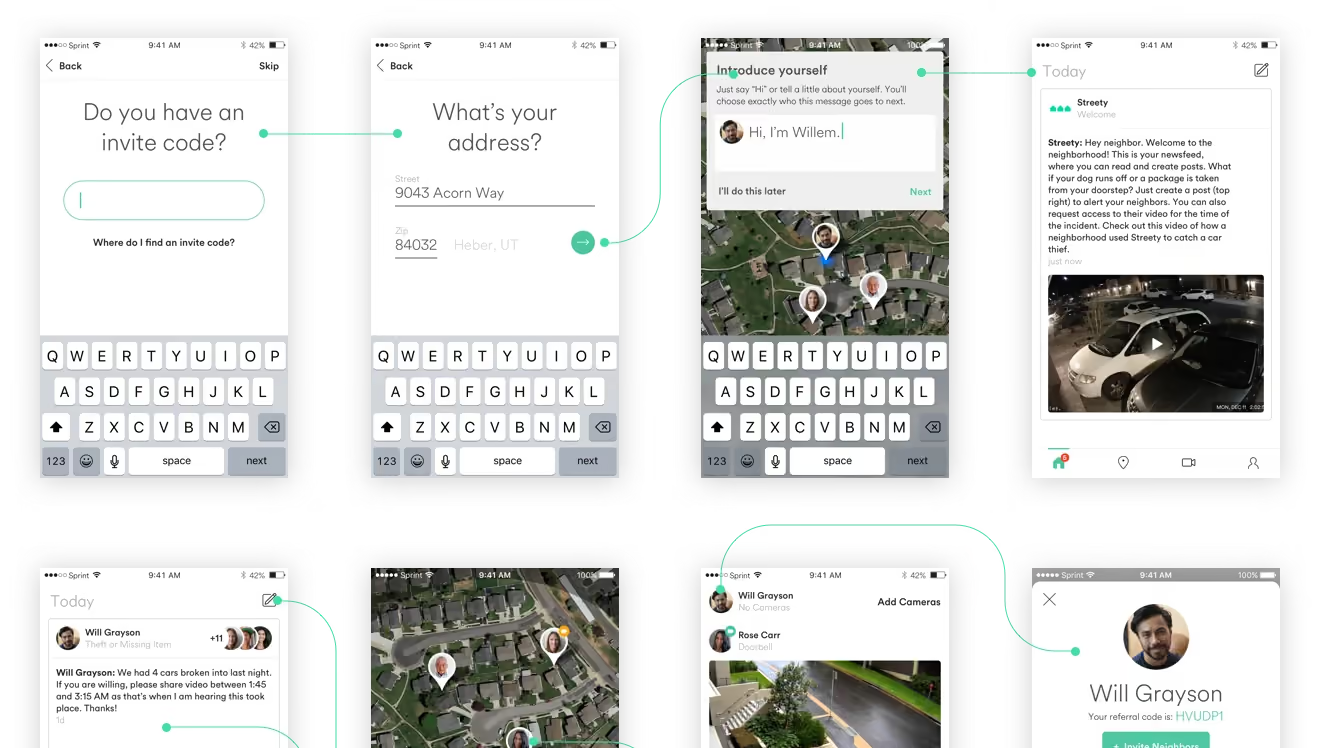
The onboarding flow, mapped screen by screen.
The person who needs the footage
is the only one willing to watch it.
The Brand—A product that could not look like a sales channel
I built the brand book alongside the product, working with our marketing lead and a copywriter. The mark is lowercase and ends in a period, playing off the Vivint wordmark, with the dot on the y drawn as a house. The persona we wrote to was the Trusted Neighborhood Mayor: the person on your street everyone already turns to, who keeps an eye on things and whose wanting to help is obviously genuine.
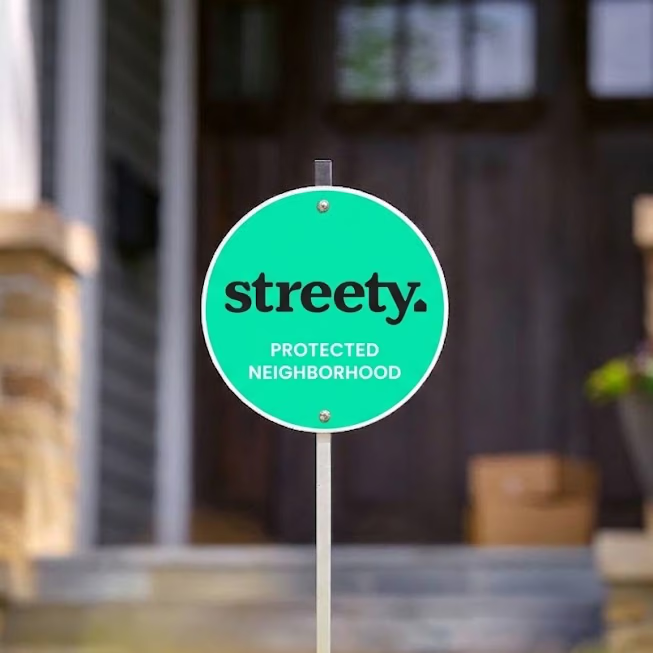
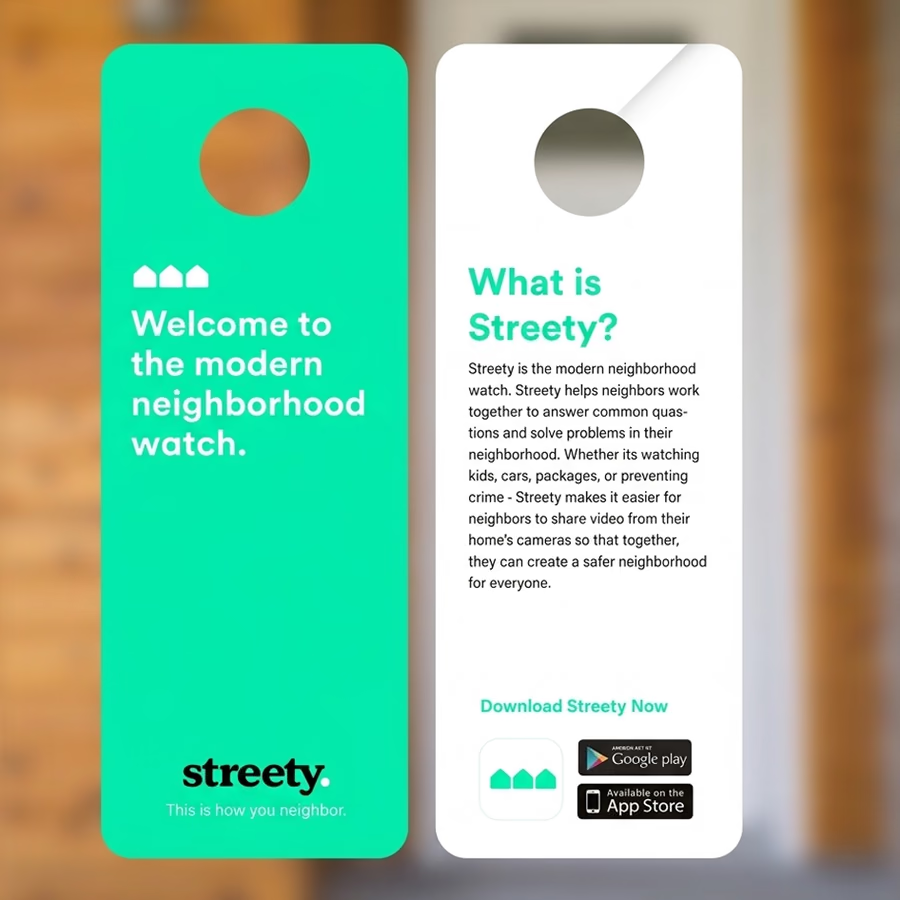
The guidelines also kept Vivint off the logo. No lockup, no “by Vivint”, no “brought to you by”. Vivint sat in the book as the first partner rather than the owner, because it had to belong to the street, not to Vivint.
Field Test—A real break-in, and the street answered
We set up a couple of test neighborhoods, and this came out of one of them. On the morning of December 11, 2017 a neighbor woke to find his car broken into. He posted a request, the cameras on his street answered it, and the footage showed the person working his way down the block. Names and faces were changed. The footage is real.
Outcome—The loop worked. The network never got dense enough.
Vivint bet its CES presence on it. The booth was built as a neighborhood: framed houses, front doors, planted trees, and a mailbox on the corner asking “How did my mailbox get knocked over?” Streety was not a station inside the stand. The stand was a street, because Streety was the thing being shown.
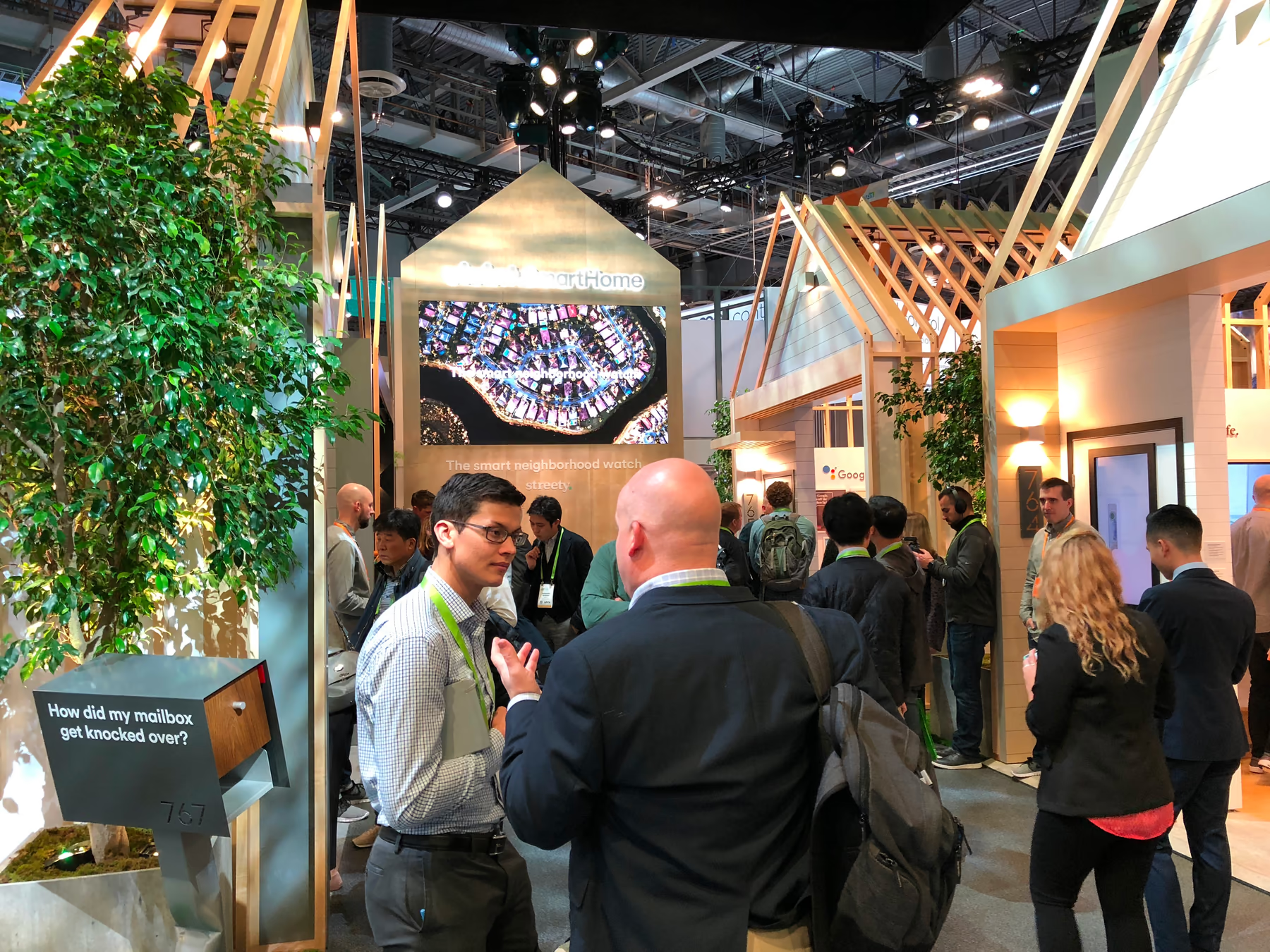
Adoption never followed. The consumer doorbell category went to Ring. Streety needed a lot of cameras on one street, and ours only came with a full security system sold door to door. We had a consumer channel ready to fix exactly that, but sales shut it down to protect the door-to-door business. We were never able to get neighborhood density. Vivint shut Streety down in 2018, the year I left.
Learnings—Key takeaways
The plan for density existed. It lost to channel conflict.
We had a consumer channel ready: our doorbell and outdoor cameras sold direct as a DIY option, priced and built to compete with Ring. That was the road to enough cameras on one street. Sales shut it down because it would cannibalize the door-to-door security business.
Shared responsibility is nobody’s responsibility
A feed asks everyone to watch everything, so nobody watches anything. A request has a named person on each end, and it only moves because one of them wants it to.
Build privacy into the architecture, not the settings
Every sharing decision sat with the person who owned the camera, so there was no permissions screen to get wrong and no default anyone could call sneaky. A rule in the structure holds on its own. A rule in the settings is only as good as the person who goes looking for it.
Next